
How do we know when grapes are ready to harvest?
Some decisions can change everything. In a winery, one of the most important is made long before the first bunch reaches the receiving hopper: when to harvest.
We might think that all it takes is to look at the grapes, check that they have a good colour and taste a couple of berries to decide whether they are ready. But although tasting grapes is one of the most enjoyable tasks in the vineyard, the reality is considerably more complex.
Behind every harvest date lie weeks of monitoring, analysis, observation and technical decisions. Because there is a difference between grapes looking ripe and having reached the balance we are looking for to produce a particular wine.
At Bodegas Luzón, we know that the timing of the harvest directly influences the quality, personality and style of the wine. That is why, as the end of summer approaches, our eyes are firmly fixed on the vineyard.
Grape ripening: Much more than a change in colour
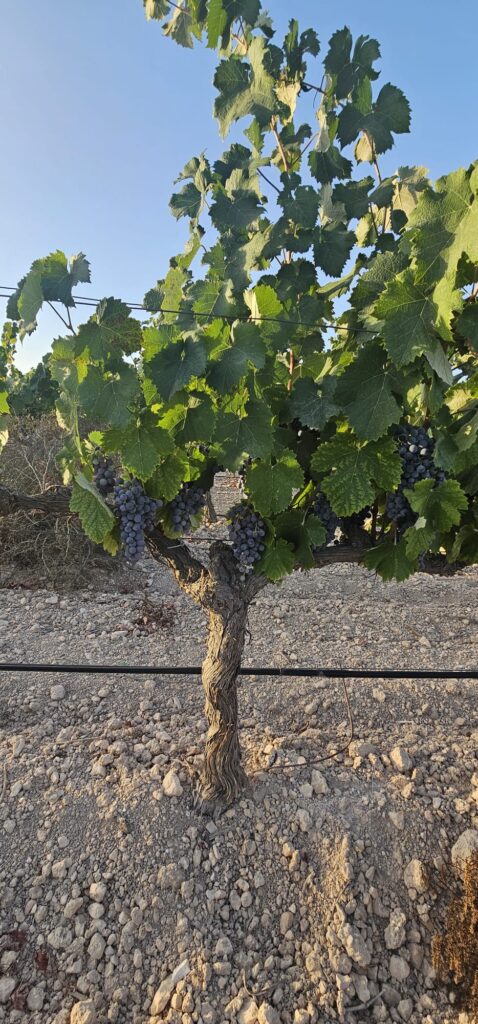
The grape ripening process begins with veraison, a stage during which berries change colour, soften and begin to accumulate sugars.
In red varieties such as Monastrell, the skins change from green to reddish, purplish and bluish tones. In white varieties, they develop yellowish or golden hues.
During this process, significant transformations take place: sugar levels increase, acidity decreases, phenolic compounds evolve and aromatic precursors develop, eventually contributing to the wine’s sensory profile.
And this is where the first important point comes in: all these processes do not necessarily evolve at the same pace. Grapes may look magnificent and still not be ready for harvest.
Sugar: What will the alcohol content of our wine be?
One of the first parameters we analyse is the sugar content of the grapes, as it allows us to estimate the wine’s potential alcohol content.
During ripening, the vine accumulates mainly glucose and fructose in the berries. These sugars will be converted into alcohol during alcoholic fermentation, thanks to the activity of yeast.
To measure them, we use tools such as a refractometer, which determines the concentration of soluble solids in the must, usually expressed in degrees Brix.
Does this mean that the more sugar the grapes contain, the better the wine will be? Not necessarily.
A high sugar concentration can result in a higher alcohol content, but we must also consider acidity and balance. Our goal is not to harvest the grapes when they reach their maximum sugar level, but when they have the right conditions for the wine we want to produce.
Acidity: The balance you cannot see, but can taste
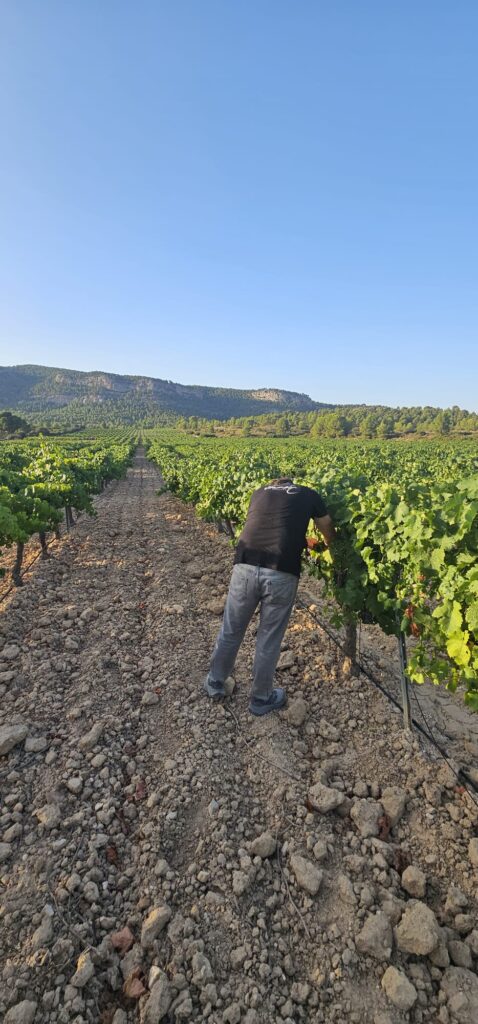
If sugar provides the potential alcohol content, grape acidity plays a fundamental role in the wine’s freshness, balance and ageing potential.
During ripening, acidity generally decreases, particularly due to the breakdown of malic acid, a process influenced by temperature.
In warm regions such as Jumilla, this aspect is especially important. High temperatures can accelerate the loss of acidity and cause grapes to reach high sugar concentrations before other components have fully developed.
That is why we analyse two parameters:
- Total acidity: indicates the overall amount of acids present in the must.
- pH: influences aspects such as microbiological stability and colour behaviour in red wines.
We look for a balanced relationship between sugar and acidity that allows us to produce expressive, fresh and harmonious wines. Because a wine with high alcohol content but insufficient freshness can feel heavy.
Phenolic ripeness: When skins and seeds have their say
Here we come to one of the most interesting aspects of red grape ripening: phenolic ripeness.
Phenolic compounds, particularly anthocyanins and tannins, have a decisive influence on the wine’s colour, structure, astringency and ageing potential.
Anthocyanins are responsible for much of the colour in red wines, while tannins contribute to their structure and astringent sensation.
To assess their development, we examine the colour of the seeds, how easily they separate from the pulp, the texture of the skins and any bitter or astringent sensations when chewing them.
Grapes may have the right sugar level and yet still contain tannins that are too green or aggressive. Harvesting too early could result in wines with greater bitterness and astringency.
That is why technological ripeness (sugar and acidity) and phenolic ripeness must be assessed together.
Grape tasting: The laboratory is also on the palate
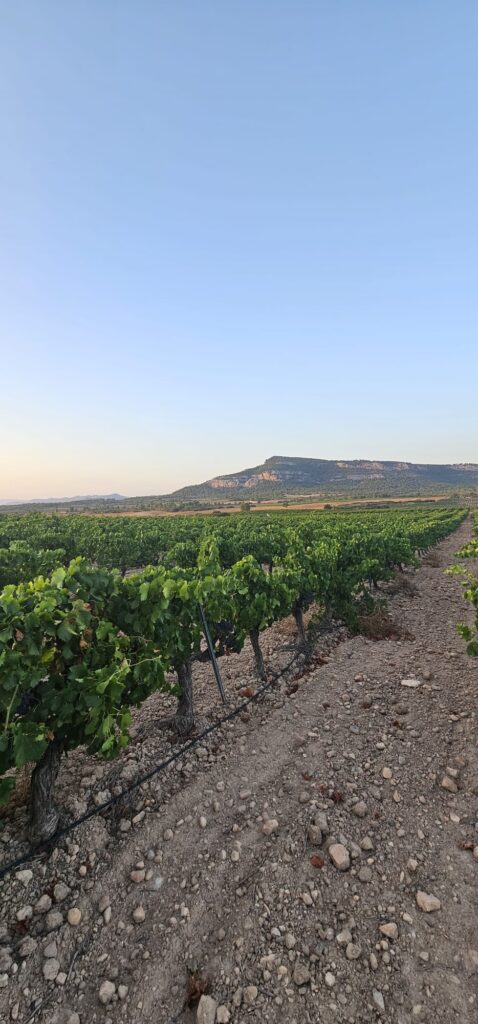
Analyses provide essential data, but there is something no figure can completely replace: tasting grapes in the vineyard.
During the weeks leading up to harvest, we collect representative samples from different plots and taste the berries to assess:
- Sweetness: intensity and balance of sugars.
- Acidity: freshness and vibrancy.
- Aromas: development of fruity and varietal notes.
- Pulp texture: consistency and how easily it separates from the skin.
- Seeds: colour, hardness and possible bitter or vegetal sensations.
We also observe how evenly the grapes are ripening. Because not all vines ripen at exactly the same rate, not even all the bunches on the same plant.
This combination of observation, analysis and tasting allows us to better understand the actual condition of the grapes and anticipate how they may behave during winemaking.
The weather also determines when we harvest
The harvest date does not depend exclusively on grape composition. Temperatures, rainfall, humidity and the risk of fungal diseases also directly influence our decision.
Heavy rainfall can cause berries to increase in weight through water absorption and alter the concentration of their components. On the other hand, high temperatures can accelerate ripening and lead to a rapid loss of acidity.
That is why monitoring is constant during this stage. We analyse the development of each plot and adjust our forecasts according to actual conditions.
There is no universal harvest date. Every variety, plot, orientation and vintage has its own timing.
What happens if we harvest earlier or later?
Choosing the right harvest moment has direct consequences for the wine’s style.
An early harvest can favour wines with greater freshness, acidity and lively aromatic profiles, although we must ensure that green notes or insufficient phenolic ripeness do not develop.
A later harvest generally provides higher sugar concentrations, lower acidity and a different evolution of aromas and tannins. It can favour more structured, mature wines, but may also increase potential alcohol content.
In varieties such as Monastrell, finding the right balance between ripeness, freshness, fruit expression and structure is particularly important to preserve its Mediterranean character.
The final decision: Harvesting when the grapes have what we are looking for
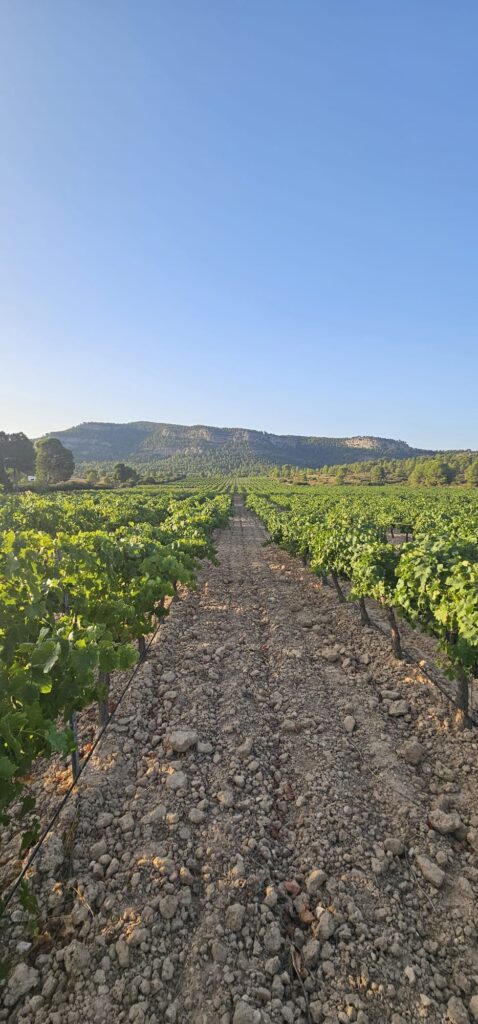
Choosing the right harvest moment is not about waiting for the grapes to reach a specific sugar level or following a date marked on the calendar.
It is a decision that brings together viticulture, oenological analysis, tasting, vineyard knowledge and experience.
At Bodegas Luzón, we understand that every plot has its own rhythm and that the work begins long before the first crates arrive at the winery.
Because wine quality does not begin with fermentation, or in the barrel, or even at the tasting table.
It begins in the vineyard, with a seemingly simple question: are the grapes ready?
And when the answer meets all the indicators we are looking for, it is time to harvest.
The rest of the story will be written in the winery.