
What is “Veraison”?: When the Grape Begins to Tell Its Story
During the summer months, when the sun reaches its peak and the vineyard is bathed in deep greens, we witness one of the most poetic moments in the vine’s cycle: veraison. But what exactly is veraison? It is that precise moment when the grape begins to show its first visible signs of ripeness, triggering a transformation that will deeply influence the quality of the wine. For those of us dedicated to viticulture and crafting wines with soul, understanding and observing veraison is much more than a phenological stage: it is witnessing the start of a silent narrative—the first chapter in the story each harvest wishes to tell, and that helps us set the date for the upcoming harvest.
What is Veraison?
Veraison is the process during which grape berries, which up until then have been uniformly green, begin to change color. In red varieties, they take on shades ranging from red to deep purple; in white varieties, golden or amber tones appear. This phenomenon typically occurs between late July and mid-August in the Northern Hemisphere, and marks the transition from the growth phase to the onset of grape ripening.
From a technical point of view, this is a metabolic transition: cell division stops, and sugars, phenolic compounds, aromas, and color precursors begin to accumulate. It’s also the point when acidity begins to drop. Symbolically, we could say this is when the grape begins to write its story—a story that will unfold until the very moment of harvest.
 Veraison in Our Vineyards
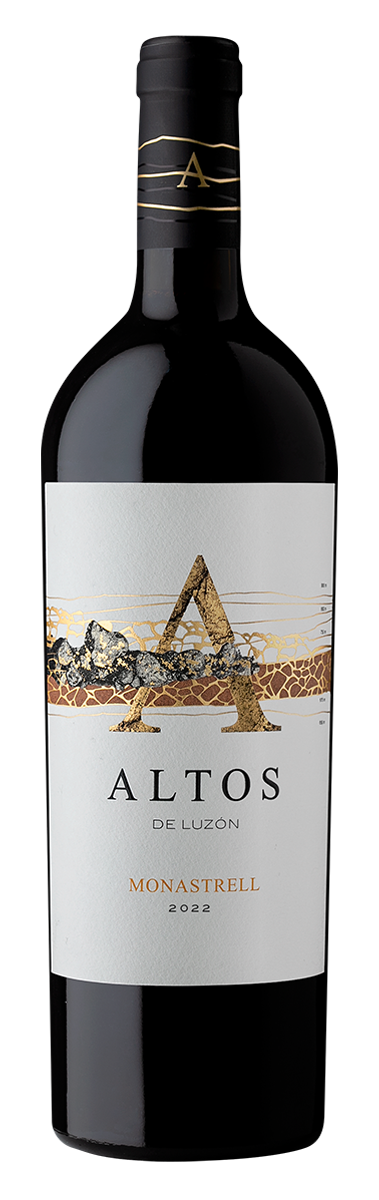
Our land, Jumilla—with its semi-arid Mediterranean climate, high altitudes, and nutrient-poor soils—offers unique conditions for growing vines. Here, the Monastrell variety, the undisputed queen of our Designation of Origin, experiences a particularly slow and expressive veraison, such as in our estate “Finca de La Melera.” It is here that the Monastrell vines destined to become Altos de Luzón begin their transformation from the second half of July onward. The combination of high daytime temperatures and cooler nights encourages a balanced ripening, ideal for producing complex, structured wines with a strong identity.
In this sense, veraison is also a natural thermometer. Its start date and evolution offer clues about the health of the vineyard, soil water availability, and the overall behavior of the vintage. In especially hot and dry years, like 2022, the process arrived early, affecting harvest planning. Those interested in revisiting how we experienced that transition from veraison to harvest can read our report: “Harvest 2022 Begins at Bodegas Luzón.”
Observation, Care, and Decisions
During veraison, our work in the vineyard intensifies. We walk among the vines, observe the color evolution of the clusters, and carry out grape sampling and tastings. All this guides key decisions in our harvest strategy: which plots to pick first, which grapes to dedicate to our young wines or more complex cuvées, and how to adapt winemaking techniques to the potential of the fruit.
This is also a phase where intervention is minimal, but vigilance is constant. Any water stress, pest infestation, or climatic shift can affect the fruit’s development. That’s why we maintain constant communication between vineyard and winery, relying on both traditional knowledge and modern technology to accompany the process in the best possible way.

Jumilla, a Terroir That Speaks
To speak of veraison in Jumilla is to speak of a land with history.
Jumilla is not only a town with an important archaeological and cultural legacy—it is also a wine region recognized as a Designation of Origin since 1966. Its landscape, shaped by mountains, valleys, and bush-trained vines, leaves a distinct mark on every cluster.
In this resilient land, Monastrell expresses itself with intensity, showing thick skins, high polyphenol levels, and an extraordinary capacity to adapt—making it the true protagonist of veraison. Every color shift in the berry during this stage reflects an ancestral symbiosis between vine and environment.
A Natural Spectacle Full of Meaning
Few moments in the vineyard are as visual as veraison. Walking between the rows, we witness a colorful spectacle that transforms the landscape. But beyond the aesthetic, this process speaks to us of ripening, balance, and destiny. Each cluster begins to differentiate itself—some more pigmented, others still green, some sweeter, others shy in aroma. It’s a subtle conversation between vine, climate, and soil, in which we are, above all, attentive listeners.
At this stage, more than ever, we understand that wine begins long before harvest. Every decision made during veraisonwill have an impact on the wine’s final expression—from its aromatic intensity to its balance on the palate.
The Value of Time and Patience
Veraison also teaches us the value of time and patience. In an era defined by immediacy, the vineyard reminds us that some processes cannot be rushed. Each berry needs its own pace, its own temperature, its own breeze. And we, as winemakers, take on the role of patient guardians, knowing that great wines are born from respecting nature’s rhythms.
At Bodegas Luzón, we work with this philosophy. We believe that each plot has a story to tell—and that veraison is the first paragraph of that narrative. We observe, interpret, and only intervene when necessary. This is how we pay tribute to the vine and the land that sustains it.
 Veraison and Emotion: The Start of a New Vintage
To say that veraison marks the beginning of a new vintage is not just a technicality—it’s a deeply emotional statement. It is the moment when we begin to sense the character of the wine to come, to envision the curves of acidity, the fruit nuances, the aromatic profiles. It is also when we start to get excited again—about what nature offers us, what we can contribute, and what wine lovers will get to enjoy.
Ultimately, veraison is not just a phase in the vine’s vegetative cycle. It is an invitation to pause, to look, and to listen to what the vineyard wants to say. It is when the grape begins to tell its story—and here at Bodegas Luzón, we are here to listen, to accompany it, and to transform it into wine.